
JIS Marine Valves
Globe, Angle or Gate Valve? Choosing Valves on Ships
How globe, angle and gate valves work, how much pressure each one costs, where the Japanese ship-valve standard JIS F 7300 puts each of them on board, what the rules require, and how to install and look after them.
The short answer
Use a globe valve where the flow must be regulated or shut off tightly in a straight pipe run, an angle valve for the same job where the pipe turns through 90°, and a gate valve where a line is only ever fully open or fully shut and the pressure loss must stay low. The Japanese standard on valve selection for ships, JIS F 7300, puts it the same way: globe valves for straight runs and angle valves for bends, both for regulating flow; gate valves used fully open or fully closed.
How each one works
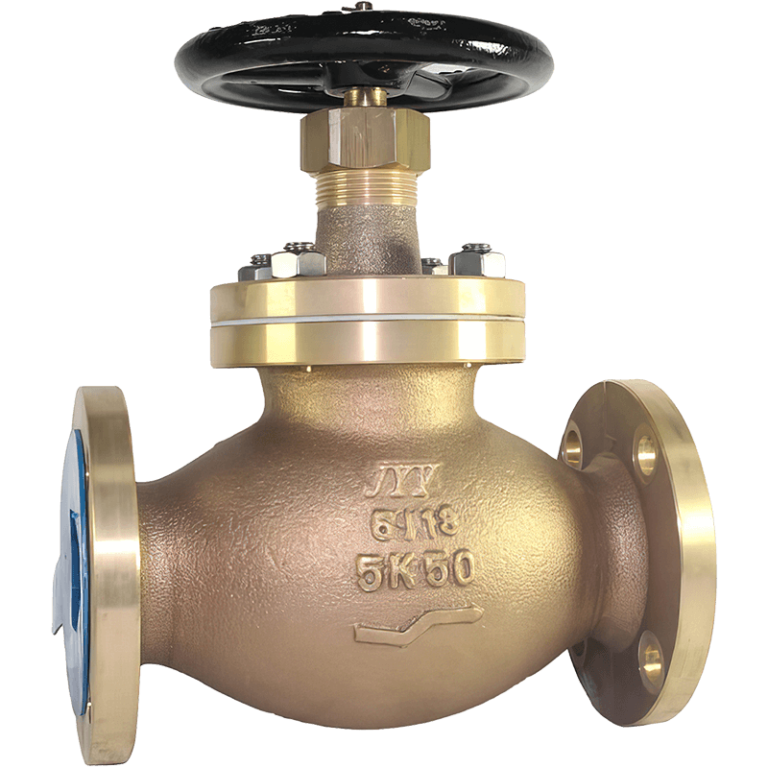
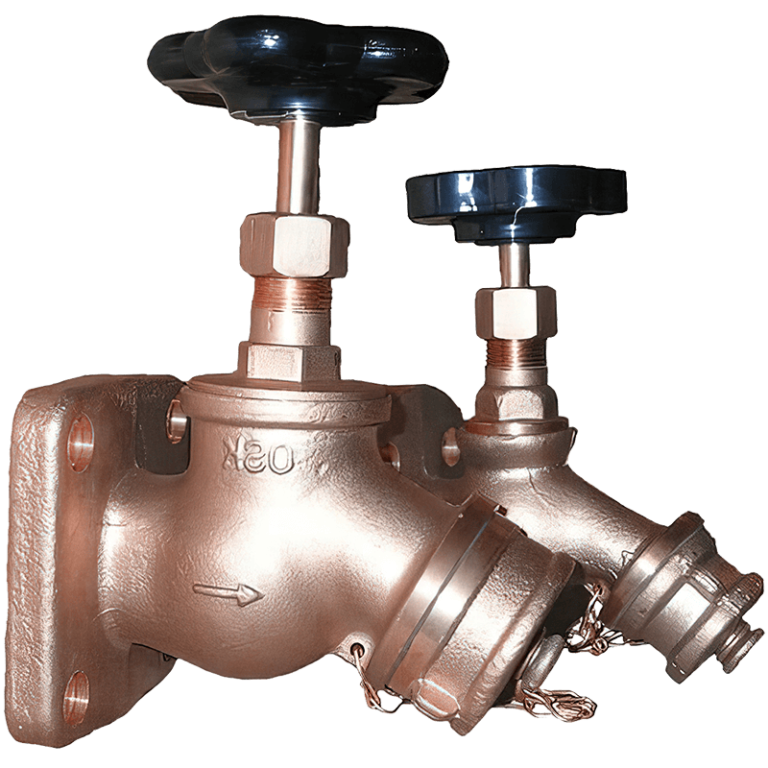
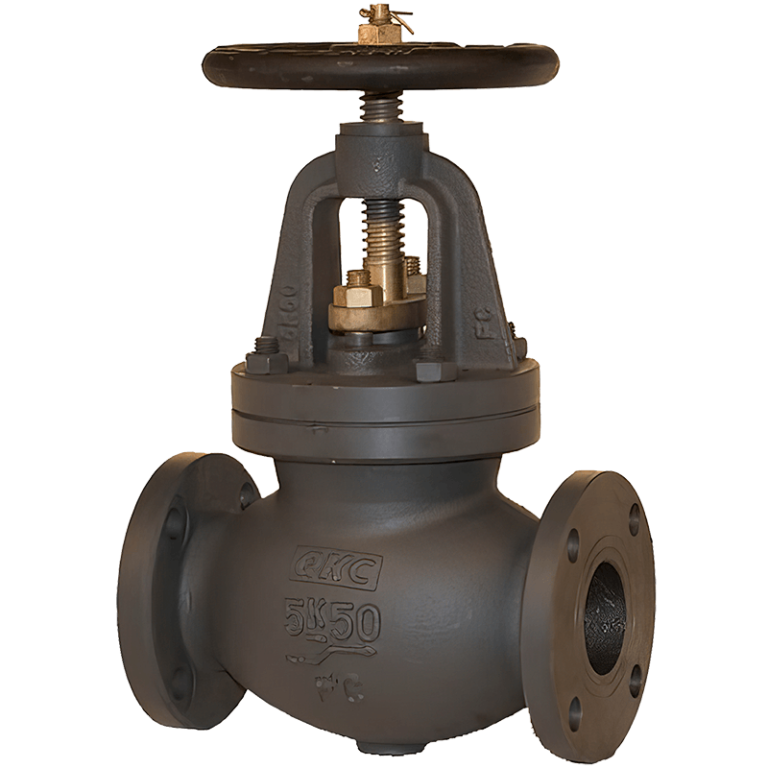
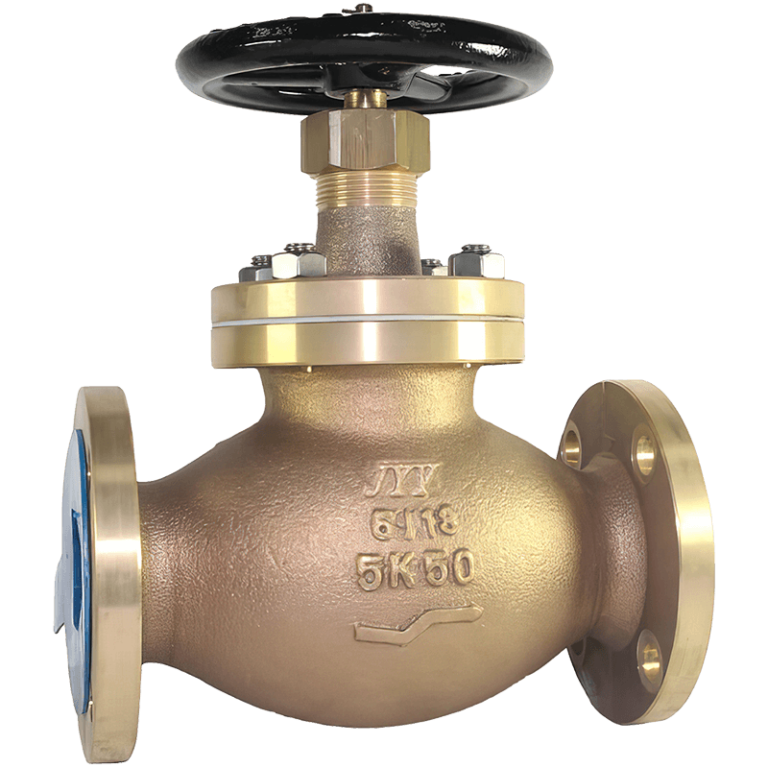
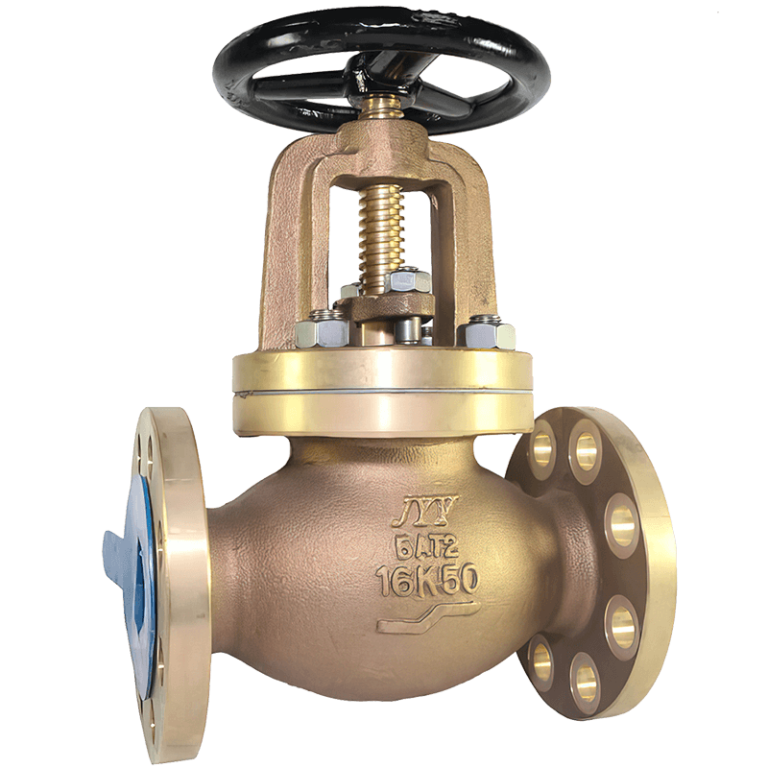
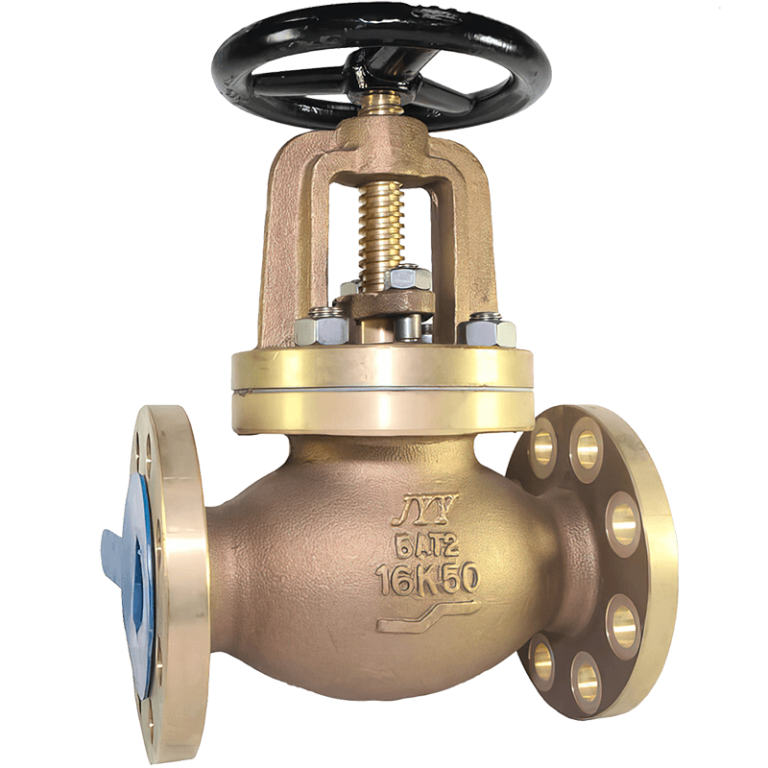
- Globe valve: the disc moves straight down onto a seat that lies across the flow. The flow has to change direction twice on its way through, in an S-shaped path – so the valve regulates well and shuts tightly, but costs more pressure than a gate valve. It is fully open after a short lift, about a quarter of the seat bore. The flow normally enters under the seat, as the arrow on the body shows.
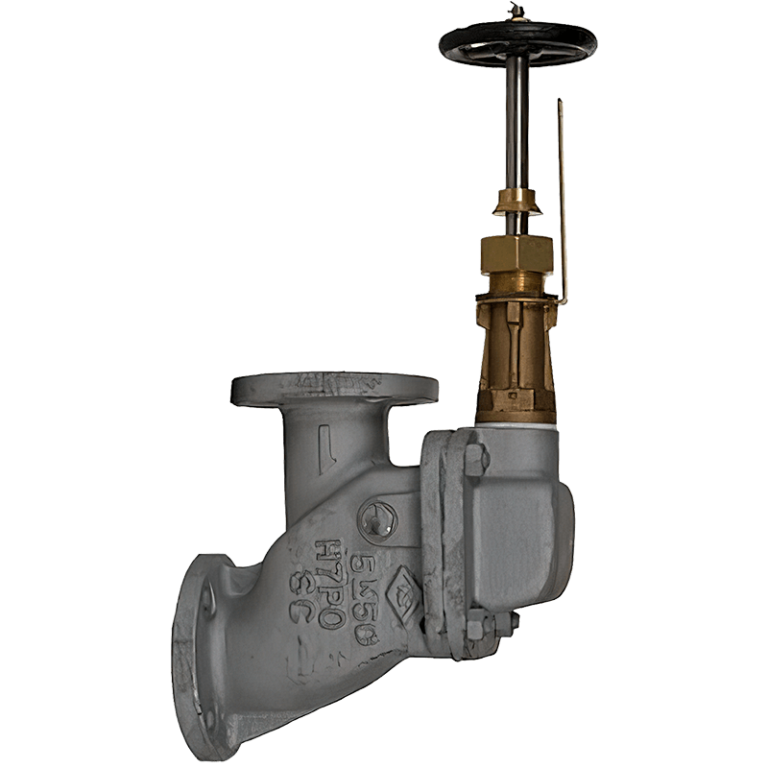
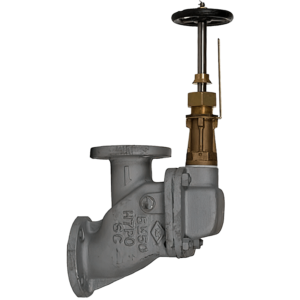
- Angle valve: the same disc and seat, but the outlet is at 90° to the inlet – a globe valve and an elbow in one body, with less resistance than a globe valve plus an elbow, and one joint fewer.
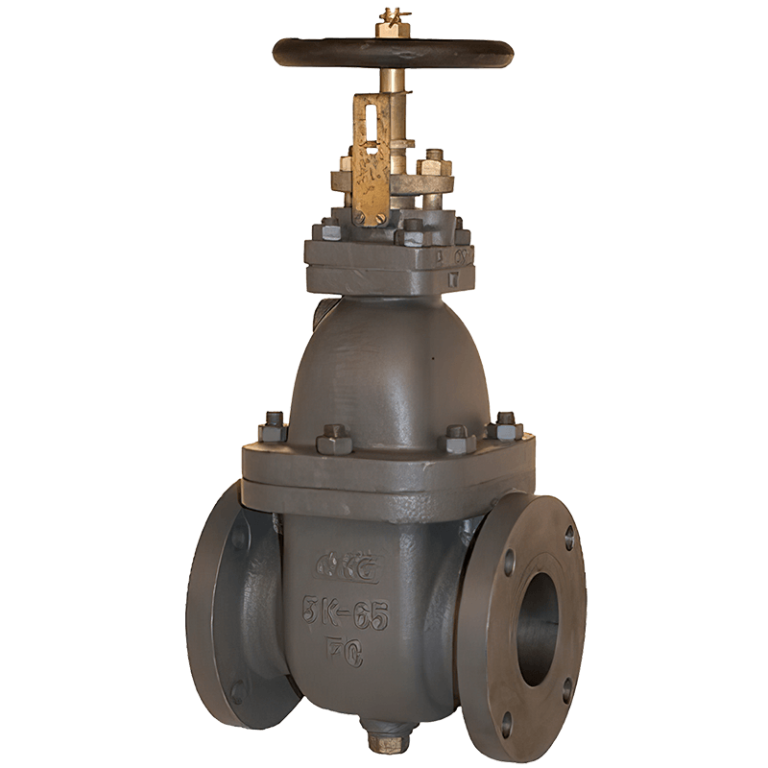
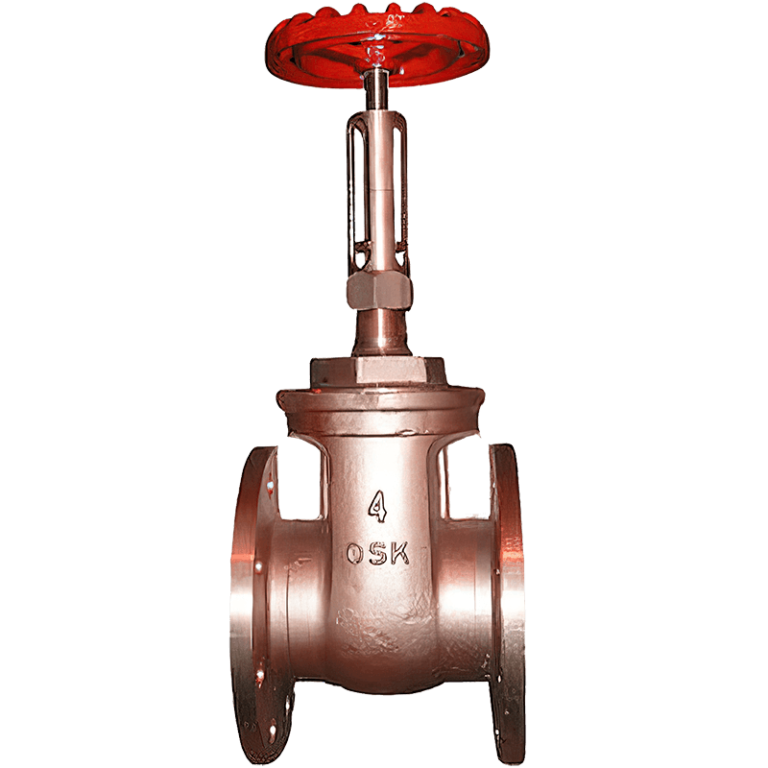
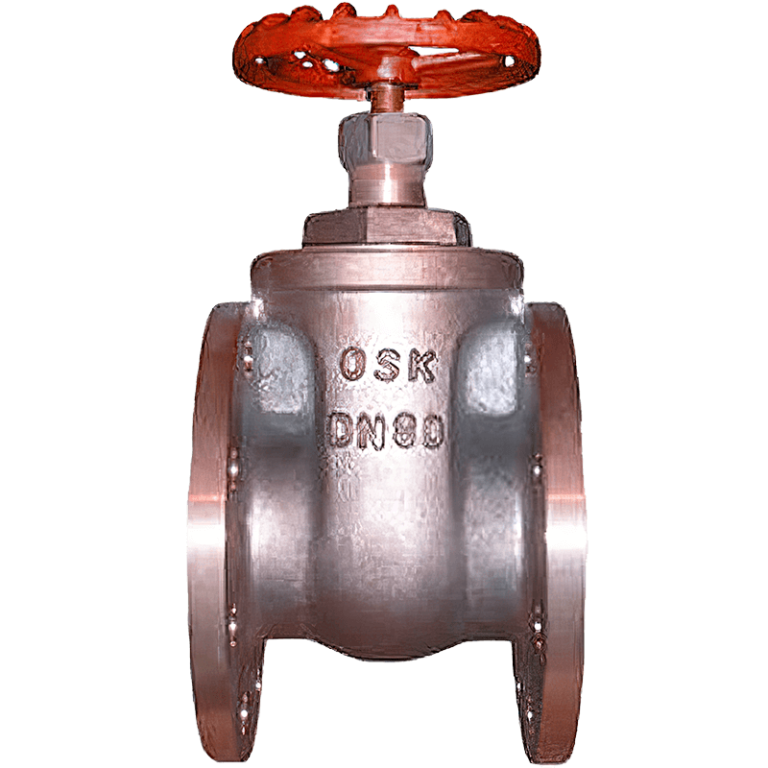
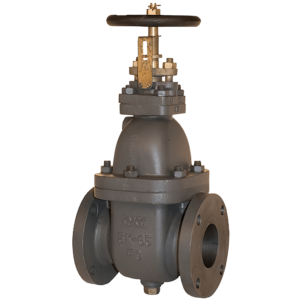
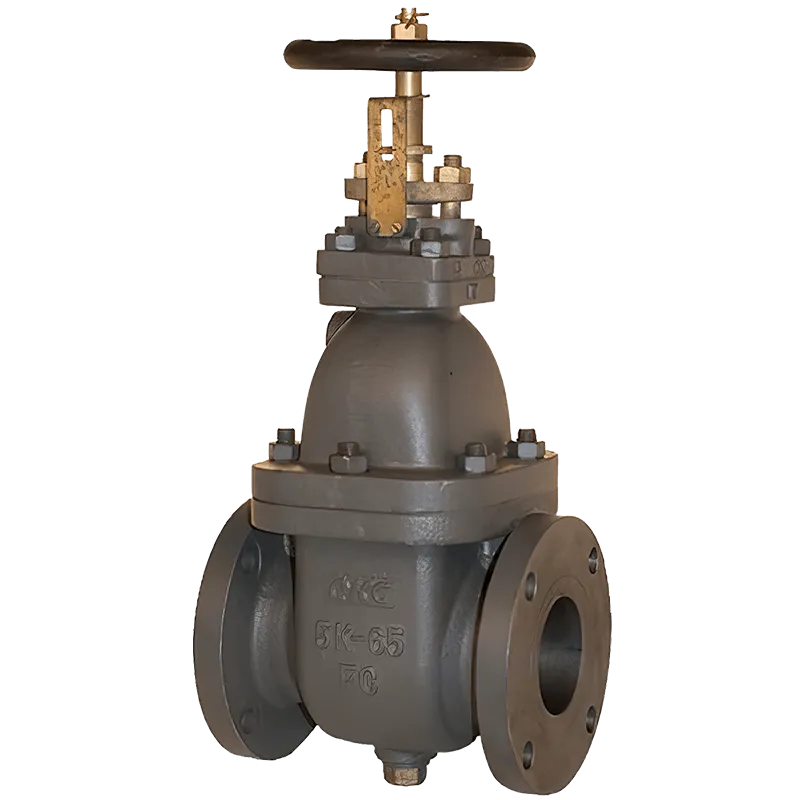
- Gate valve: a wedge (the gate) slides across the flow and, when the valve is open, rises completely out of the waterway into the bonnet – so the open valve is almost as free as the pipe itself. It needs many turns of the handwheel and is meant for on/off service only: partly open, the wedge vibrates in the flow, the seat faces wear, and the valve then leaks when closed. Gate valves work in either direction and have no flow arrow.
How big is the difference in pressure loss?
Handbook resistance coefficients give the order of magnitude for fully open valves. For a 2-inch valve, the values of Crane’s Technical Paper 410 (as reproduced in engineering references) come to a K of about 0.15 for a gate valve and 6.5 for a globe valve – some 40 times more; a standard 90° elbow is about 0.6. Angle valves lie in between, at roughly 1 to 3 depending on the design. Measured values differ by 20 to 50 % from one design to another, so a pipe calculation should use the figures of the actual valve – the ranking stays the same: gate, then angle, then globe.
Which valve goes where on board?
JIS F 7300 (“Shipbuilding – Application for valves and cocks”, current edition 2009, reconfirmed in 2025) is the Japanese rulebook for choosing marine valves. In short:
- Sea water, fresh water, bilge and ballast: globe, angle and gate valves, swing check valves and butterfly valves, each within its pressure–temperature limits.
- Steam: globe and angle valves; gate valves mainly for exhaust steam.
- Compressed air: globe and angle valves – gate valves, swing check valves and cocks are better not used.
- Fire hoses: globe or angle hose valves, such as our bronze hose valves.
- Ship’s side (hull valves): globe, angle, gate or butterfly valves; hull valves normally carry an opening indicator.
- Fuel and lubricating oil: globe, angle and gate valves, swing check valves, and butterfly valves within the limits of the class rules.
In practice, gate valves serve on/off duty in larger lines such as ballast and fuel oil transfer; globe valves are used where the flow is set – steam and temperature control, bilge suctions; angle valves where the pipe turns anyway. Butterfly valves – compact, with little resistance and economical in large sizes – are widely used in large sea-water and ballast lines today; class rules limit them by medium, temperature and pressure, and at the ship’s side by the way they are mounted.
What the rules require
The rules prescribe functions, not valve types:
- Collision bulkhead (SOLAS Chapter II-1, Regulation 12): the pipe through the collision bulkhead needs a valve operable from above the bulkhead deck – a “screw-down valve” on ships built before 1 January 2024 (cargo ships may use a butterfly valve since 2020); on ships built from 2024 on, a remotely controlled valve that is normally closed. Ordinary cast iron is not allowed.
- Fire main (SOLAS Chapter II-2, Regulation 10): a valve at every fire hydrant, so that a hose can be removed while the fire pumps run, and isolating valves that separate the machinery-space part of the fire main.
- Bilge systems: screw-down check valves at many points – see screw-down check valves.
- Operation: hand-operated valves close clockwise, and their open and closed positions must be clearly marked – for example in Türk Loydu’s piping rules for naval ships (2022) and in the US rules (46 CFR 56.20-9), which also ask for an indicator on every valve whose stem does not rise.
What the JIS standards say about the designs
- Globe and angle valves of JIS F 7427 (bronze) and F 7425 (cast iron) are drawn together – one drawing for both in each size range. The angle valve is shorter than the globe valve, but not half its length.
- Bonnets: in our 5K and 10K bronze valves, smaller sizes have a screwed bonnet and larger sizes a bolted bonnet; cast iron valves have bolted bonnets.
- Trim: according to JIS F 7300, cast iron valves have copper-alloy trim (B series, for water up to 120 °C) or stainless steel trim (S series, for steam and crude oil).
- Stem and indicator: JIS F 7300 asks for an opening indicator on valves whose stem does not rise, and on hull valves; a rising stem shows the position by itself.
- Marking: globe and angle valves carry a flow arrow; gate valves do not. How to read the rest of the marking is explained in how to order JIS marine valves.
Installation and maintenance
- Globe and angle valves: stem upright where possible, flow from under the seat as the arrow shows. With the pressure under the disc the valve is easier to operate, the closed valve keeps the pressure off the stem packing, and the seat wears less.
- Gate valves: stem upright (sideways on a vertical pipe), fully open or fully closed only; flow in either direction.
- Closing: clockwise, on all three.
- Wear: a gate valve used for throttling, or a globe valve too large for its duty that works almost shut, makes the water run very fast across the seat. It cuts fine grooves into seat and disc (“wire drawing”) that grow into leaks. Small damage is repaired by lapping; renew the gland packing at intervals.
- Valves that are rarely used: operate them regularly. Inspections of collision-bulkhead valves keep finding extended spindles disconnected or corroded, handwheels buried under stores and nobody sure whether the valve is open or shut.
Our globe, angle and gate valves
- JIS bronze valves: globe and angle valves 5K and 16K (F7301–F7304), screw-down check globe and angle valves, and hose valves – see JIS bronze valves.
- JIS cast iron valves: globe valves 5K and 10K (F7305, F7307), angle valve 5K (F7306), gate valve 5K (F7363, DN 50–500) and screw-down check valves – see JIS cast iron and cast steel valves.
- ANSI: Class 300 bronze gate valve and Class 300 bronze globe valve, NPT threaded, DN 15–50.
Sizes, materials, test pressures and dimension tables are on each product page.
Questions buyers ask
- Can a gate valve regulate flow?
- No. Partly open, the wedge vibrates and the flow wears the seat faces, so the valve leaks when closed. Use a globe or angle valve to regulate.
- Why does a globe valve have an arrow?
- The flow should enter under the seat: the valve is then easier to operate and, when closed, keeps the pressure off the stem packing.
- Is an angle valve better than a globe valve and an elbow?
- Hydraulically, yes – fewer changes of direction and less pressure loss – and it saves a fitting and a joint.
- Which valve has the lowest pressure loss?
- A fully open gate valve: its resistance is close to that of a straight piece of pipe.
- How do I tell a gate valve from a globe valve?
- A gate valve has a straight-through body under a tall bonnet and no flow arrow; a globe valve has a rounded body with the seat inside and an arrow on the body.
- Which standard says which valve goes where on a ship?
- In Japan, JIS F 7300; the functions are set by SOLAS and the class rules – for example a remotely controlled valve on the collision bulkhead of ships built from 2024 on.
Request a quote
Tell us the sizes and quantities you need — we reply with a quote.
Globe, Angle or Gate Valve? Choosing Valves on Ships