
JIS Marine Valves
Storm Valves on Ships and Load Line Regulation 22
What a storm valve is and how it works, what Regulation 22 of the Load Line Convention asks for scuppers and overboard discharges, where a screw-down storm valve fits, the JIS standard F 3057, and what surveys look at.
The short answer
A storm valve is a non-return valve on an overboard discharge – a scupper, a sanitary discharge or another drain led out through the ship’s side. Its flap opens to let water out and falls back onto its seat when the flow stops or the sea pushes back up the pipe. Many storm valves also have a handwheel or spindle that holds the flap shut – in the words of the Load Line Convention, an “automatic non-return valve with a positive means of closing”. Regulation 22 of the Convention decides which arrangement a discharge needs – one valve, two valves, or a valve with a closing device – from the space the pipe drains and how high its inboard end lies above the Summer Load Line.
What is a storm valve?
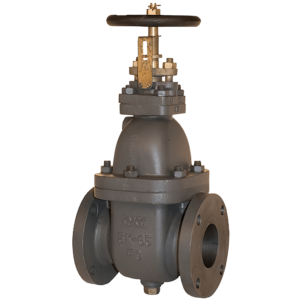
“Storm valve” is a trade name: the Convention and the class rules speak of automatic non-return valves. The usual design is a flap valve. The flap hangs on a hinge pin; the outflow lifts it, and it closes by its own weight – often with a counterweight on the flap arm that keeps it nearly balanced, so that it opens easily. Two body shapes are common: a straight (vertical) body for a vertical pipe and an angle body where the pipe turns.
- Plain storm valve: works on its own; it cannot be shut by hand.
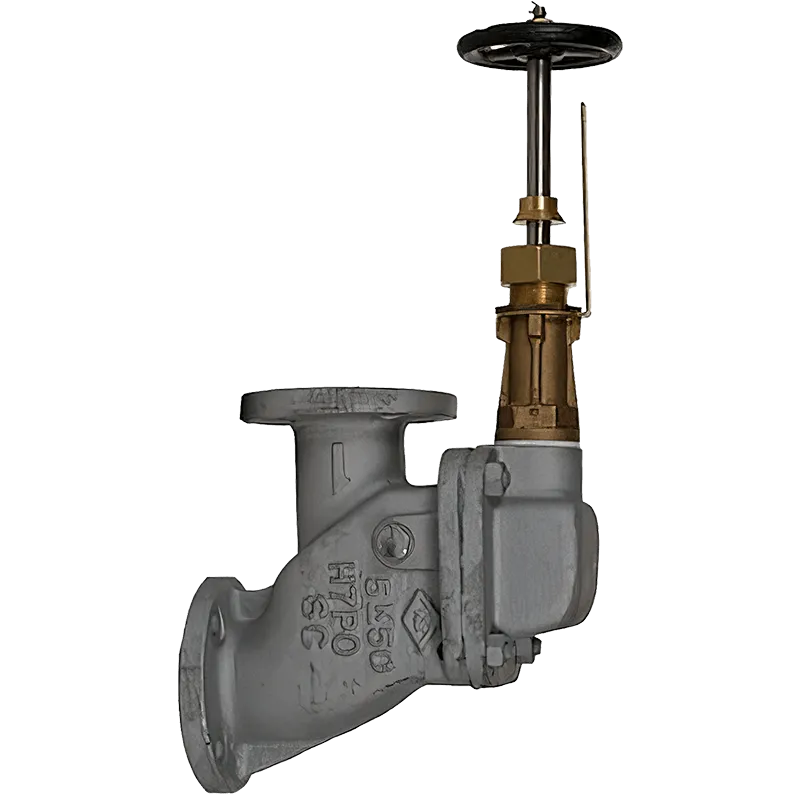
- Screw-down storm valve: a handwheel or spindle presses the flap onto its seat. It can only hold the valve shut, not open it; with the spindle backed off, the valve works as an automatic non-return valve again.
A screw-down check valve (SDNR) is a different valve: a globe-pattern valve whose disc is not fixed to the stem, used mainly in bilge systems – see screw-down check valves.
What does Regulation 22 require?
Regulation 22, “Scuppers, inlets and discharges”, of the International Convention on Load Lines (1966, in the text of the 1988 Protocol as amended – by resolution MSC.143(77), in force since 1 January 2005, and MSC.491(104), in force since 1 January 2024) sets the rules for every pipe that leaves the hull near or below the freeboard deck:
- Normal case – paragraph (1)(a): a discharge through the shell from a space below the freeboard deck, or from an enclosed superstructure or deckhouse on it, needs an efficient and accessible means against water passing inboard – normally one automatic non-return valve with a positive means of closing from a position above the freeboard deck. The means of operating it must be readily accessible and have an indicator showing whether the valve is open or closed.
- Higher inboard end: if the inboard end of the pipe lies more than 0.01 L above the Summer Load Line, two automatic non-return valves without positive means of closing are accepted; more than 0.02 L, one is enough (L = the ship’s length as defined in the Convention). With two valves, the inboard one must be accessible for examination in service – otherwise a locally controlled sluice valve is fitted between them.
- Alternative – (1)(b): one automatic non-return valve plus a sluice valve controlled from above the freeboard deck.
- Machinery spaces – (1)(d): sanitary discharges and scuppers may have a locally operated positive-closing valve at the shell together with a non-return valve inboard.
- Kept closed at sea – (1)(f): the non-return rules apply to discharges that are open in normal operation; a discharge that stays closed at sea needs a single screw-down valve operated from the deck.
- Low outlets – paragraph (4): scuppers and discharge pipes from any level that pass through the shell more than 450 mm below the freeboard deck, or less than 600 mm above the Summer Load Line, need a non-return valve at the shell – unless the pipe has a substantial wall thickness (and paragraph (1) does not ask for a valve).
- Materials – paragraph (6): valves and shell fittings of steel, bronze or other approved ductile material; ordinary cast iron is not acceptable – see marine valve materials for sea water.
- Pipe walls – paragraph (7): a “normal” discharge pipe has a wall of at least 4.5 mm (outside diameter up to 155 mm) to 6 mm (230 mm and more); a pipe of “substantial thickness” at least 7 mm (up to 80 mm) to 12.5 mm (220 mm and more).
Table 22.1 of the Convention shows the accepted arrangements as drawings. SOLAS (Chapter II-1, Regulation 15) repeats the principle for discharges below the bulkhead deck of passenger ships and the freeboard deck of cargo ships – subject to the Load Line Convention.
Where does a storm valve fit?
Every automatic non-return valve of Regulation 22 can be a plain storm valve: the pair of valves for a higher inboard end, the single valve above 0.02 L, the valve at the shell under paragraph (4), the non-return valve of the sluice-valve alternative. Where the regulation asks for a positive means of closing, a screw-down storm valve does the job – controlled from a position above the freeboard deck, with an open/closed indicator, in the normal case of paragraph (1)(a), or locally where Table 22.1 allows local control. In machinery spaces the valve at the shell is a locally operated shut-off valve, with the non-return valve inboard. Which arrangement a given discharge needs is settled when the load line is assigned – by the flag state or the classification society acting for it.
The JIS standard: JIS F 3057
JIS F 3057:2020 (first issued 1964) is the current Japanese standard for storm valves. It replaced its 1996 edition and withdrew JIS F 3058, F 3059 and F 3060, which became types of the one standard:
- bronze or cast steel body (the old F 3057 and F 3058);
- the same with a screw-down closing device, as a handwheel type or a spindle type (the old F 3059 and F 3060).
Inside, a hinged flap with a counterweight closes against the seat. The standard gives a normal maximum working pressure of 0.33 MPa and a pressure test at 0.5 MPa, with inspection to JIS F 7400.
Our storm valve
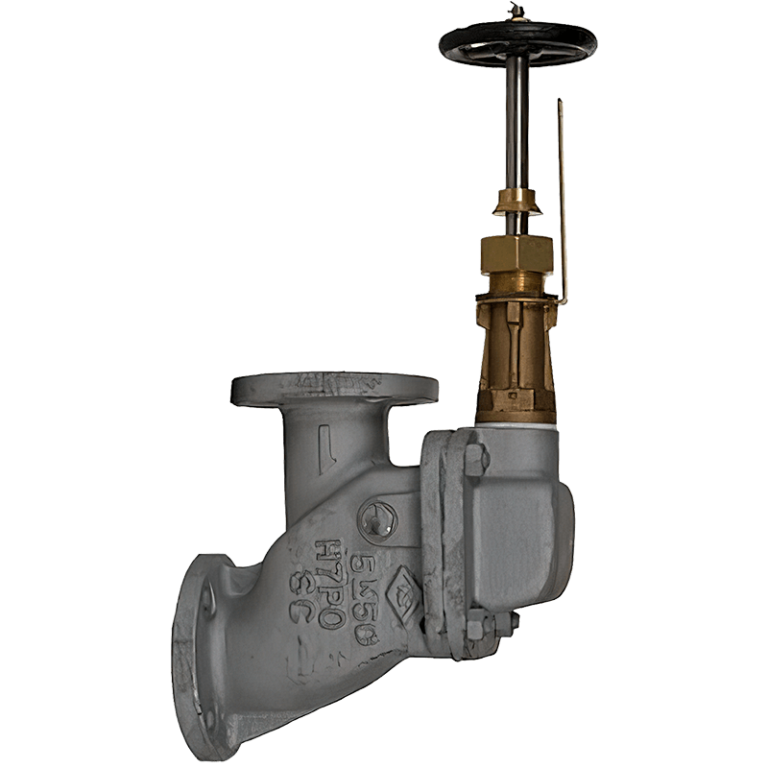
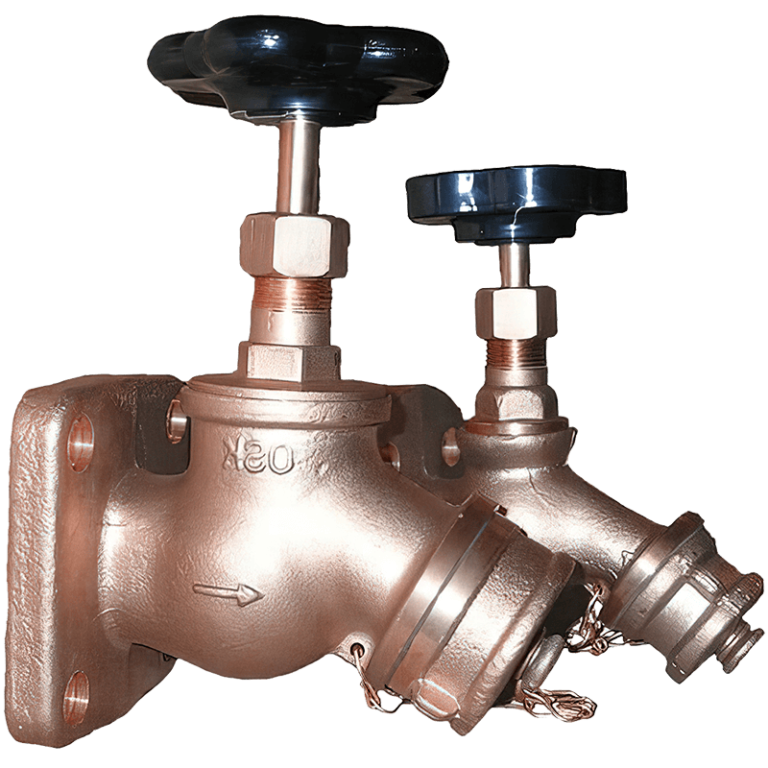
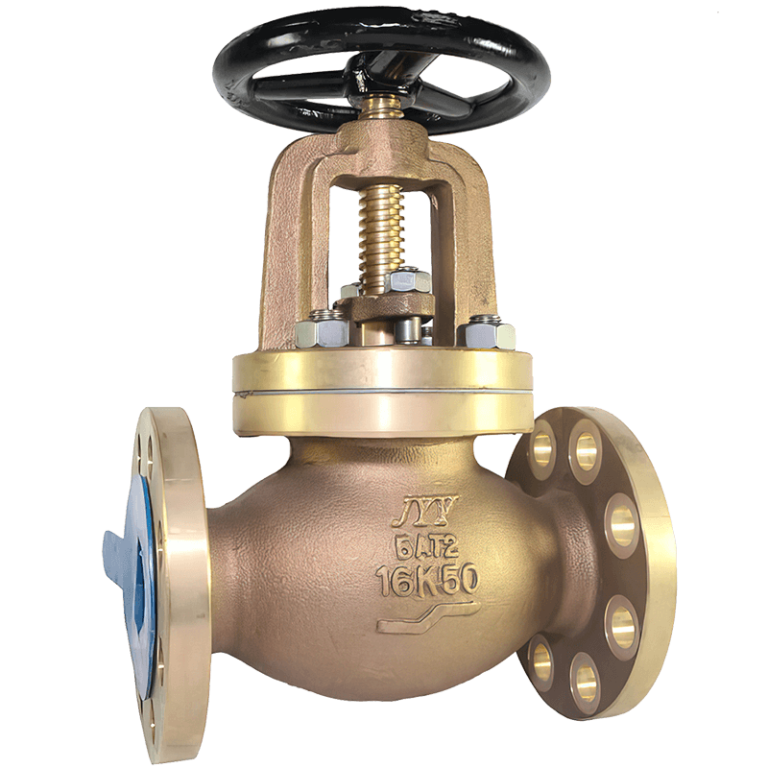
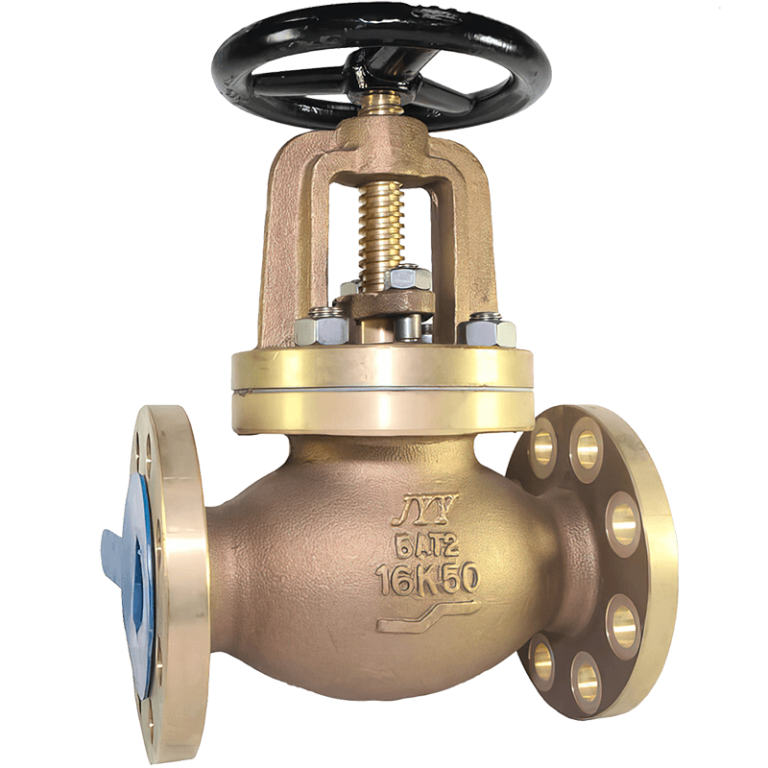
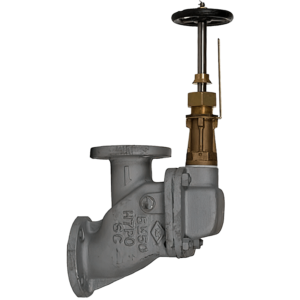
Our cast steel angle storm valve JIS F3057 (F3060) – 5K, DN 50–200 – has a cast steel body and bonnet, a bronze disc, an NBR rubber seat, a stainless steel stem and a handwheel; it is tested with water at 0.50 MPa. Dimensions, IMPA codes and the drawing are on its product page. In your enquiry, please say whether the valve needs a closing device and how it will be operated – at the valve or from above the freeboard deck.
Surveys and maintenance
- Surveys: under the IMO survey guidelines (HSSC, resolution A.1186(33)), the initial, annual and renewal load line surveys include examining the scuppers, inlets and discharges of Regulation 22. Flag-state checklists ask the same: valves regularly inspected and maintained, in good working order and easily accessible, with indicators that show the open or closed position.
- Look underneath: in 2018 DNV reported a ship whose overboard non-return valve had corroded through at the bottom while the top looked sound; it leaked in rough seas, flooded the engine room and caused a blackout. DNV’s advice: examine all sea valves, scuppers and sanitary discharges included, when the ship is in dry dock – hammer test, check the underside with a mirror or camera, check any rubber lining – dismantle them fully at intervals (ideally every five years), and test closing and tightness after reassembly.
- In service: keep the flap and its hinge free to move, work the closing device now and then so that it does not seize, and make sure the indicator tells the truth.
What to tell us when you order
- the body shape – straight (vertical) or angle – and the size;
- with or without a closing device, and whether it is worked at the valve or from above the freeboard deck;
- the pressure class of the flanges (5K) and the body material – never ordinary cast iron at the shell;
- the classification society and the certificate you need.
A full list of what an enquiry should contain is in how to order JIS marine valves.
Questions buyers ask
- What is a storm valve?
- A non-return flap valve on an overboard discharge: it lets water out and stops the sea coming back in. With a handwheel or spindle it can also be held shut.
- Does the Load Line Convention use the term “storm valve”?
- No. Regulation 22 speaks of automatic non-return valves, with or without a positive means of closing.
- When is no closing device needed?
- When the inboard end of the discharge lies more than 0.01 L above the Summer Load Line, two automatic non-return valves without one are accepted; above 0.02 L, one valve. The flag state or the classification society confirms the arrangement.
- Can a storm valve be made of cast iron?
- Not of ordinary cast iron: Regulation 22 asks for steel, bronze or another approved ductile material at the shell.
- Does the handwheel open the valve?
- No. On a screw-down storm valve it only holds the flap shut; with the spindle backed off, the outflow opens the flap by itself.
- Which JIS standard covers storm valves?
- JIS F 3057, current edition 2020. It replaced the old standards F 3058, F 3059 and F 3060.
Request a quote
Tell us the sizes and quantities you need — we reply with a quote.
Storm Valves on Ships and Load Line Regulation 22